FLIP
Feedback, Learning, Integration, Process
The ceremonial discipline that ensures every struggle, spike, innovation, and failure is recorded, classified, and fed back into the standards. The process always varies based on who is running the work, what the goals are, and what Internal Logic is available. But the learning loop itself is structural, not optional.
FLIP is not a standalone section of the operating model: it is the feedback-learning-integration mechanism that runs through PULSED. As projects move through Opening, Sprint Cycles, and Closing, FLIP operates at specific gates (FLIP-A through FLIP-F) to capture findings, classify them as Internal Logic or implementation pattern, and feed them back into the portfolio canon. The sections below detail how FLIP operates across the project lifecycle.
From cards to doctrine
How failures become canon through systematic evidence collection and feedback. Each sprint strengthens the doctrine the next sprint operates under.
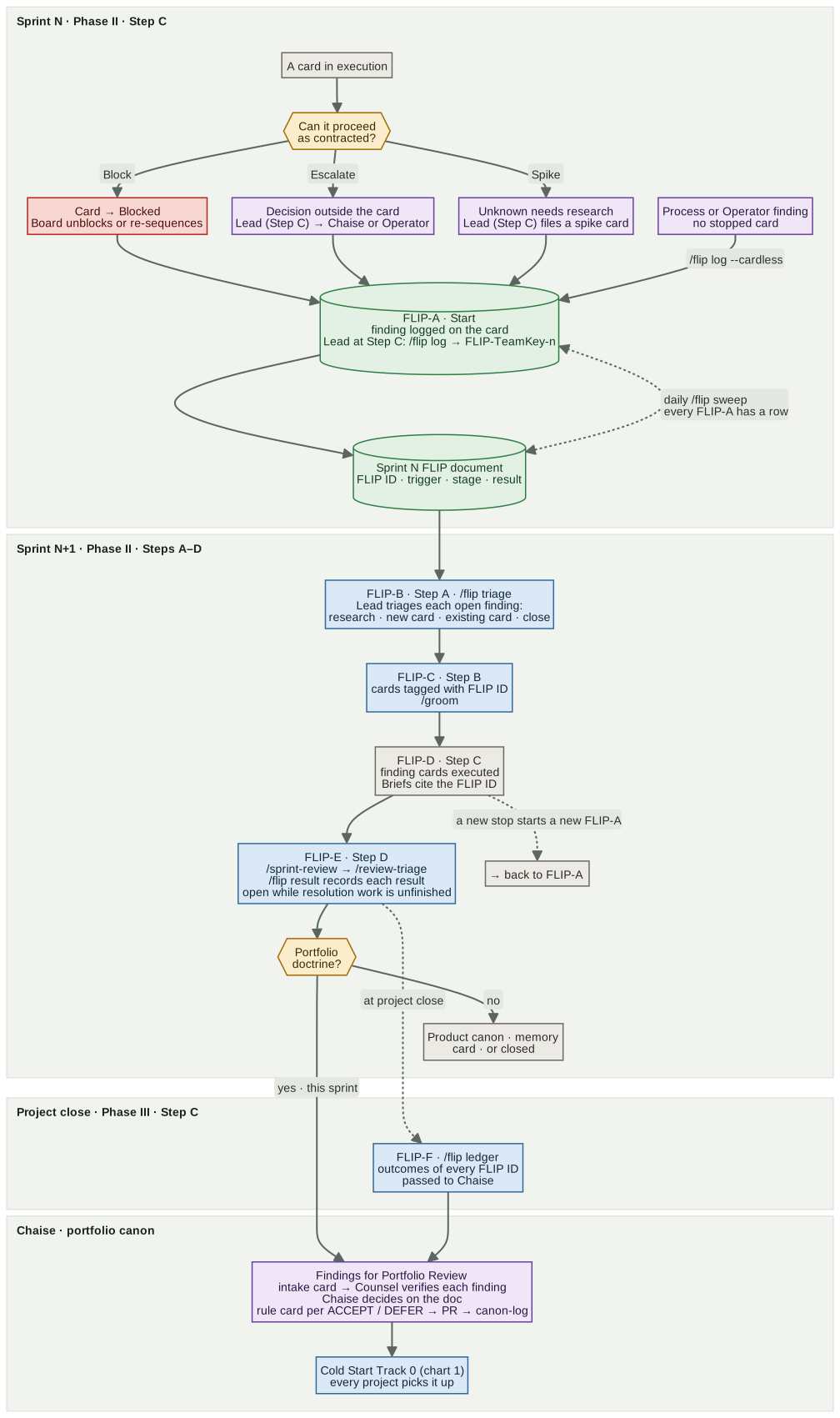
The six stages, by FLIP ID
- FLIP-AStart. Phase II · Step C, sprint N. A card stops on a Block, Escalate or Spike. The Dev moves it to Blocked and logs the finding on the card; Lead assigns the FLIP ID and records it in the Sprint FLIP Document.
- FLIP-BTriage. Step A of sprint N+1. Lead compiles the open findings and triages each: a spike, a new card, a fold into an existing card, or a no-work close.
- FLIP-CGroom. Step B. Findings become groomed cards, each tagged with its FLIP ID.
- FLIP-DExecute. Step C. Finding cards run like any card; their completion briefs cite the FLIP ID.
- FLIP-EResult. Step D. Board reports whether each finding's cards were executed; Lead records the result by FLIP ID. Portfolio doctrine goes to Chaise that same sprint.
- FLIP-FLedger. Phase III · Step C, at project close. Every FLIP ID is compiled into an outcomes ledger and passed to Chaise.